
 In 2012, Google launched Project Aristotle, a two-year study aimed at uncovering what makes some teams more effective than others.
Initially, the company believed that management style or team leadership wasn’t all that important and assumed that simply having the most talented people would naturally create the best teams. However, the results showed that team dynamics, particularly how team members interact and feel within the group, were far more critical to success than individual talent alone.
Five Key Factors of Effective Teams
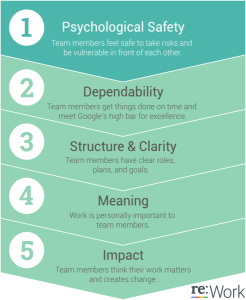 Through their research, Google identified five key factors that made teams consistently effective:
- Psychological Safety: This was found to be the most important factor. In teams with high psychological safety, members felt comfortable taking risks, asking questions, admitting mistakes, and proposing new ideas without fear of judgment or punishment.
- Dependability: Teams performed better when members could rely on each other to meet deadlines and deliver quality work consistently.
- Structure and Clarity: Teams were more effective when everyone understood their specific roles, responsibilities, and the team’s objectives. A clear structure allowed teams to stay focused and work efficiently.
- Meaning: When team members felt their work was personally meaningful, they were more engaged and motivated. This could come from aligning the team’s mission with individual values or personal growth.
- Impact: Team members performed better when they believed their work had a direct impact on the company or society. Understanding the broader significance of their contributions encouraged more dedication to team success.
Applying Project Aristotle to Mining and Blue-Collar Workplaces

While psychological safety and team dynamics are often discussed in tech and office environments, the findings of Project Aristotle are just as applicable to industries like mining and blue-collar workplaces, where safety, dependability, and clear communication are paramount.
In mining and other physically demanding industries, the use of a Management Operating System (MOS)—a structured set of practices for planning, executing, and monitoring work—can help integrate these five key factors into daily operations:
- Psychological Safety: In high-risk environments like mining, where safety is the top priority, workers need to feel comfortable raising concerns about hazards or process flaws without fear of retaliation or judgment. By creating a culture of psychological safety, managers can encourage workers to speak up about potential risks and inefficiencies. This openness can be embedded into a Management Operating System through regular safety huddles, open-door policies, and structured feedback sessions where every worker’s voice is valued.
- Dependability: The MOS elements, such as scheduled reporting and task tracking, help ensure that workers meet their commitments and deadlines. Dependability is crucial in mining, where the failure of one team member to do their part could compromise safety or delay operations. A dependable team can rely on each other to execute tasks that align with the system’s operational plans.
- Structure and Clarity: A well-implemented Management Operating System ensures that everyone has a clear understanding of their roles and responsibilities. In mining, clarity in tasks and processes is essential to maintaining both safety and efficiency. MOS tools, such as clear job instructions, visual dashboards, and task allocation, can enhance this structure and eliminate confusion, helping teams to focus on their objectives.
- Meaning: Even in blue-collar settings, it’s important for workers to feel that their work matters. Mining companies can build meaning into their culture by aligning workers’ daily tasks with larger goals, such as contributing to the community’s infrastructure or protecting the environment. By embedding this sense of purpose into the Management Operating System, leaders can help workers stay engaged and motivated.
- Impact: Mining teams perform better when workers see the tangible results of their efforts—whether it’s increasing production, reducing safety incidents, or achieving environmental sustainability goals. The MOS can track and communicate these achievements, showing teams how their day-to-day work contributes to the company’s success and broader societal goals.
Conclusion
The insights from Google’s Project Aristotle—conducted in 2012—are not just relevant for tech or office teams. When applied to mining and blue-collar environments, the lessons about psychological safety, dependability, structure, meaning, and impact can drive better outcomes. Combining these key factors with a robust Management Operating System allows mining companies to create teams that are safer, more efficient, and more engaged. By fostering psychological safety and embedding these principles into the MOS, leaders in these industries can unlock the full potential of their workforce.
At OpsKit, we have woven Psychological Safety into “Doctor MOS” along with the more obvious questions that lead to better dependability, structure & clarity, meaning and impact. If you’re keen to find out more, click the link and Make Contact with us.