

The $9,999 Question Operations Leaders Should Be Asking
There’s a story that every maintenance manager knows. A critical machine breaks down. Production stops. Teams scramble for hours, even days. Finally, a seasoned technician arrives, studies the machine for a few minutes, makes one adjustment, and everything roars back to life. The invoice? $10,000. When questioned, the breakdown reads: “Fixing the problem: $1. Knowing what to fix: $9,999.”
This story has never been more relevant, or more urgent than it is today.
The Uncomfortable Truth About AI in Operations
Here’s what nobody wants to admit: While ChatGPT and other AI tools are getting embedded in office work, like most technology projects, many industrial AI implementations are failing on the shop floor.
The numbers are sobering. Over the past 20 years, countless advanced technologies have been deployed across industrial operations. Yet disappointingly few have delivered on their promised benefits. Multi-million dollar investments sit unused. Cutting-edge predictive maintenance systems generate alerts that nobody trusts. AI-powered tools remain unopened on tablets gathering dust in control rooms.
Why?
It’s Not About the Technology, It’s About the Gap
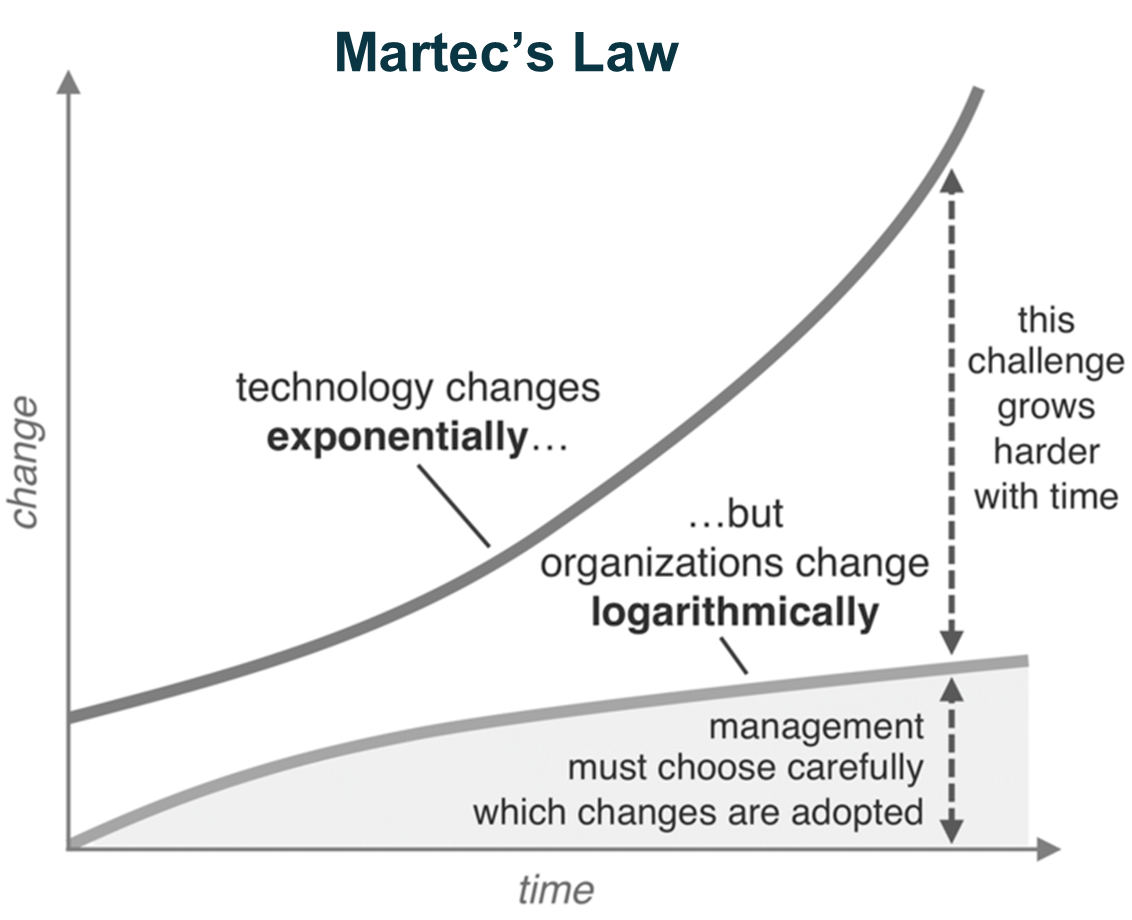
The answer lies in something called Martec’s Law: Technology changes exponentially, but organizations change logarithmically.
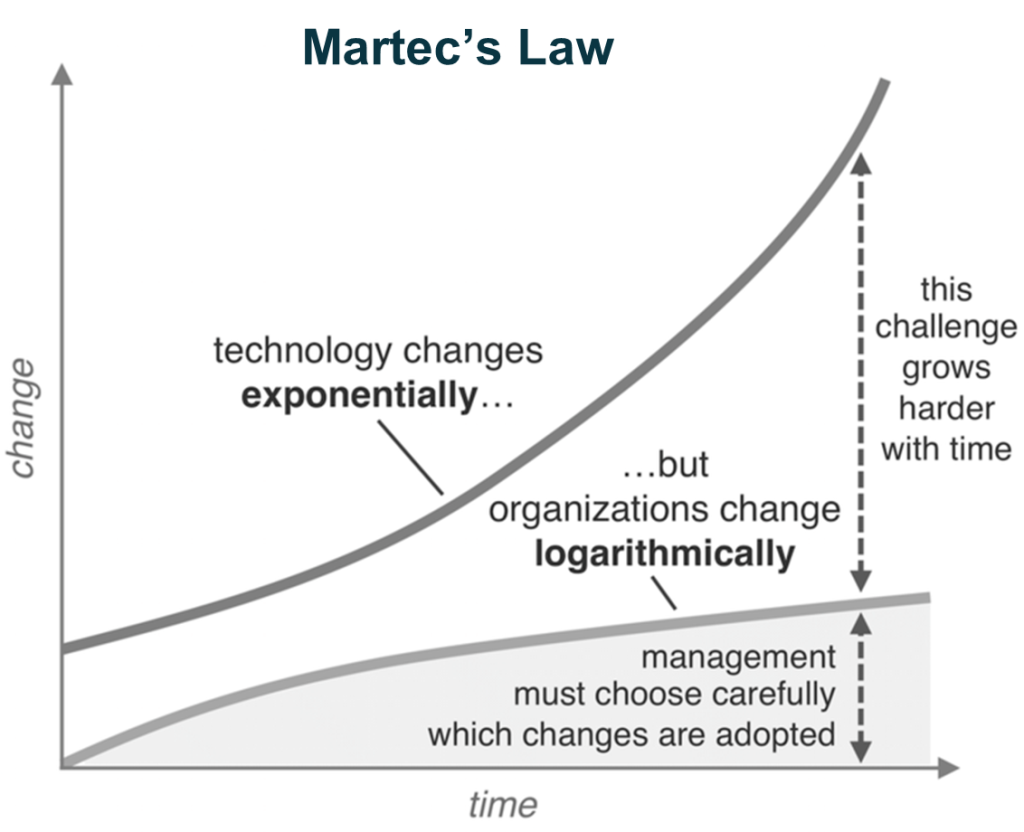
This gap has always existed, but AI has turned it into a chasm. While Silicon Valley releases game-changing AI models monthly, your maintenance team is still struggling to get people to consistently log work orders digitally. While AI capabilities double every few months, your operators are dealing with the same challenges they faced a decade ago just with more expensive tools they don’t use.
But here’s where it gets interesting: This gap is particularly brutal in operations for a reason that nobody talks about.
The Context Trap That’s Killing Your ROI
Think about how you use ChatGPT. You’re sitting at your desk, coffee in hand, keyboard at your fingertips. You have a question, you type it in, you get an answer. Simple.
Now picture your maintenance technician at 3 AM. Machine down. Alarms blaring. Wearing heavy gloves and safety glasses. Oil everywhere. Production manager breathing down their neck. Losses mounting at thousands of dollars per minute.
Is that technician going to open up a laptop navigate to chatgpt, type in a carefully worded prompt?
Of course not.
This is the Context Trap, the massive difference between how AI works in the comfort of an office and the reality of the shop floor. It’s why adoption rates for operational AI tools are a fraction of what vendors promise. It’s why your ROI calculations may not materialize.
The Hidden Advantage Nobody Sees
But here’s the plot twist: This challenge is actually your biggest opportunity.
While your competitors chase every shiny new AI tool, the constraints of operational reality force you to be selective. You can’t afford to experiment with technology that might work. You need solutions that definitely will. This forced discipline, this requirement to be ruthlessly practical is exactly what separates the winners from the losers in the AI revolution.
The most successful operations teams aren’t trying to “implement AI.” They’re solving specific, expensive problems. They’re not asking “How can we use AI?” They’re asking “How can we turn that $9,999 knowledge into something every technician can access?”
The Path Forward Exists—But It’s Not What You Think
After studying dozens of successful and failed AI implementations in industrial operations, a clear pattern emerges. The organizations that succeed don’t follow the traditional technology adoption playbook. They do something fundamentally different.
They recognize that in operations, the goal isn’t to replace the seasoned technician, it’s to give every technician the ability to become seasoned, faster than ever before. They design for the reality of the shop floor, not the ideal of the conference room. They focus on amplifying human expertise rather than replacing it.
Most importantly, they understand that success requires more than choosing the right technology. It demands a complete rethinking of how technology gets absorbed into the daily reality of operational work.
Your Next Step
The gap between AI’s potential and operational reality isn’t closing, it’s widening. Every month you wait, the pressure grows. Your best technicians are retiring. Your competitors are figuring this out. The cost of inaction is mounting.
But you don’t have to figure this out alone.
Download our comprehensive white paper: “Navigating the AI Revolution: Making Martec’s Law Work for Frontline Operations”
In this detailed guide, you’ll discover:
- The “Hack-Pack-Stack” methodology that’s helped operations teams achieve 10x faster AI adoption
- The 5-point framework for identifying which AI investments will actually deliver ROI (and which are just expensive experiments)
- Real-world case studies of operations teams that turned Martec’s Law from a barrier into a competitive advantage
- The “Context Gap Checklist” to evaluate whether an AI solution will actually work on your shop floor
- Specific strategies for building “skilled maintenance at scale” without disrupting operations
This isn’t a theoretical framework. It’s a practical playbook developed from the hard-won lessons of operations teams who’ve successfully navigated the AI revolution—and those who haven’t.
The exponential growth of AI isn’t slowing down. The question isn’t whether you’ll adapt, but how quickly and effectively you can bridge the gap.
[Download the White Paper Now]
Because in a world where downtime costs thousands per minute, the difference between knowing what to fix and being able to fix it has never been worth more.
P.S. Still skeptical? That’s good—you should be. The white paper includes a “Selective Innovation Framework” specifically designed for operations leaders who’ve been burned by technology promises before. It’s time to turn healthy skepticism into strategic advantage.